The Body Leaves Clues — But Only If We Know How to Read Them
This article has been written by Geoff Dakin
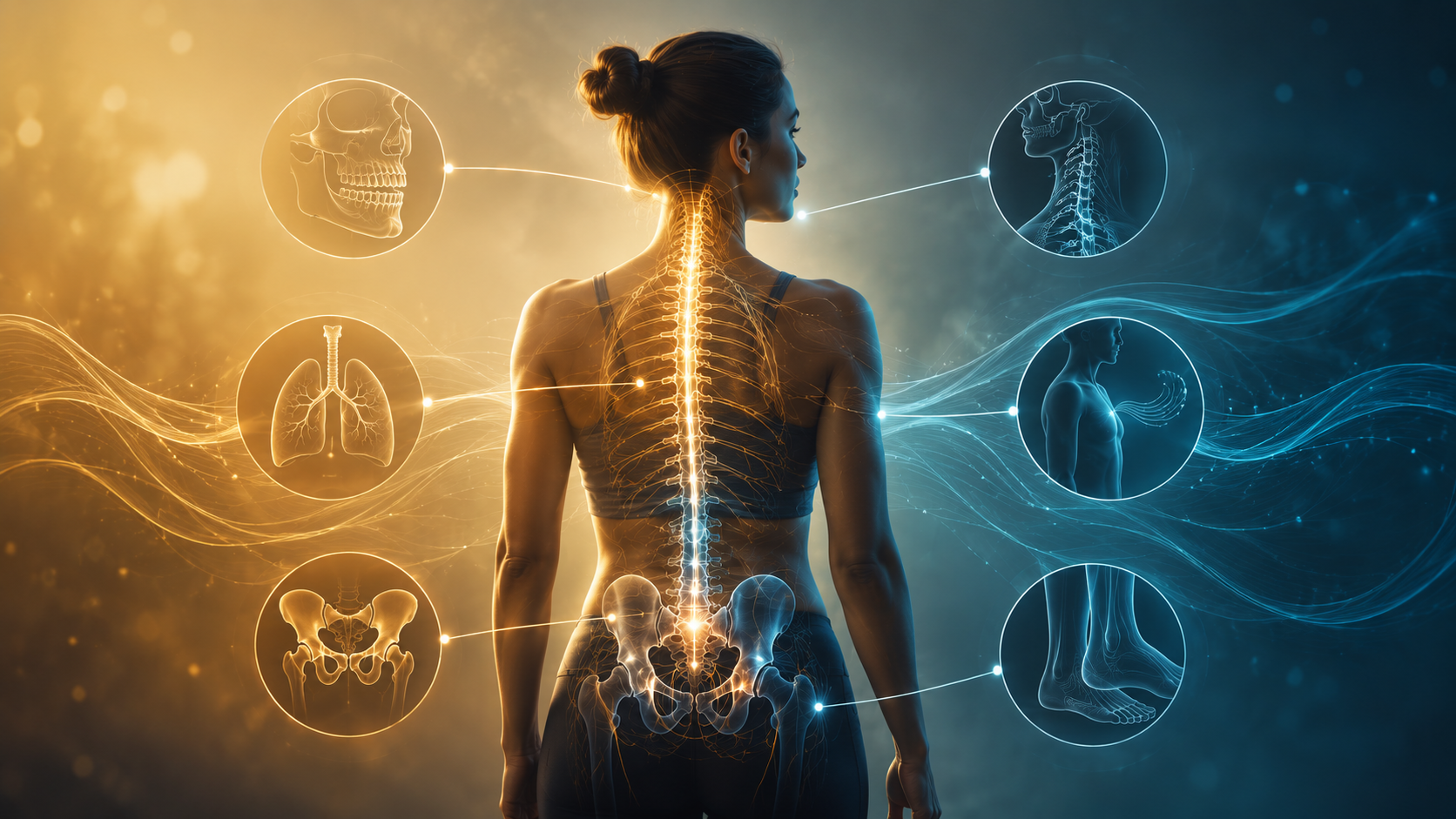
A patient rarely arrives with one problem.
They may arrive with one complaint, one diagnosis, or one body part that has finally become impossible to ignore. But by the time a problem has become chronic, the body has usually built an entire compensation strategy around it.
The jaw hurts. The shoulder burns. The hip catches. The headaches return. The bite feels wrong.
From the patient’s side of the table, it can feel like the body has become a collection of unrelated failures. But the body is rarely that random.
It leaves clues.
The problem is that it does not speak in professions.
It does not say, “This is a dental problem,” or “This belongs to upper cervical chiropractic,” or “Please send this one to the manual therapist.” It speaks through tone, posture, pain, guarding, asymmetry, fatigue, breathing, balance, bite changes, and the strange little patterns that keep showing up when nobody is quite sure what they mean.
The body keeps track of adaptation. Not in words, not in diagnoses, and not according to professional categories, but in tone, posture, guarding, breath, balance, and the patterns that keep returning until someone learns how to read them.
The clinician’s job is not to force those clues into a preferred map.
The job is to learn how to read them.
That sounds simple enough.
It is not.
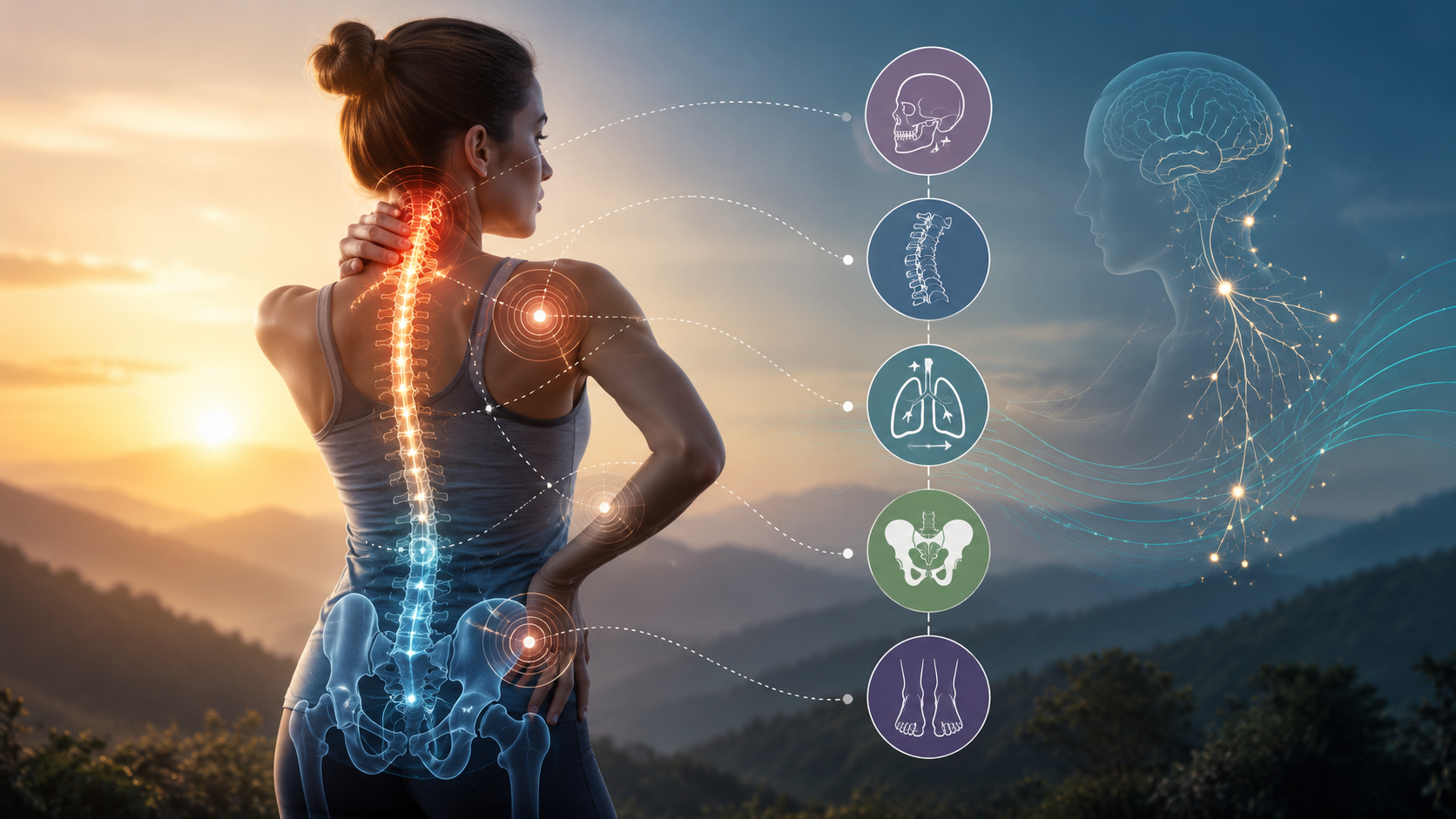
When a patient enters a fragmented healthcare system, their symptoms are often translated into the language of whichever professional room they happen to enter first. Jaw pain becomes a jaw problem. Shoulder pain becomes a shoulder problem. Headaches become a neck problem. Hip pain becomes a hip problem. A bite that feels wrong becomes a dental problem.
Sometimes that translation is correct. Often, it is incomplete.
Symptoms are clues, not verdicts.
That distinction matters because the site of complaint is not always the source of the pattern. A painful shoulder does not automatically mean the shoulder is the driver. A bite that feels wrong does not automatically mean the bite is the best place to begin. A hip that hurts does not always mean the hip began the problem. A headache does not automatically mean the neck owns the case.
The symptom may be the driver. It may be an access point. It may be the weather vane. A weather vane does not create the wind; it shows us which way the system is being pulled. In the same way, the symptom may be the place where the system is most loudly complaining because the true problem has been quietly pulling on the body from somewhere else.
This is why assessment matters so much.
Not assessment as a performance, not assessment as a checklist, and not assessment as a ritual we perform before doing the thing we had already decided to do.
Real assessment is an interrogation of the system — or perhaps more accurately, a conversation with the nervous system.
Not an aggressive conversation. The body is not a suspect under a hot lamp.
But we are asking questions. We are asking what changes when the patient sits, stands, breathes differently, loads the feet differently, or feels safer. We are asking what happens when the head is repositioned, when the pelvis becomes more symmetrical, or when one piece of the system is given better information.
These are not abstract questions. They are the questions that begin to reveal whether we are looking at the driver, an access point, or the weather vane.
This is why the jaw-first question mattered. The point was never that the jaw is unimportant. The point was that important and first are not the same thing.
That distinction applies far beyond the jaw.
Once the map gets bigger, the real question becomes: how do we know what is leading?
A patient whose bite feels different sitting than standing is giving us a clue. The teeth did not change. The restorations did not change. The mandible did not suddenly become a different mandible. The postural demand changed.
Gravity entered the room, and the bite responded.
That does not mean the bite is irrelevant. It means the bite may be expressing something larger than dentistry alone can explain.
A patient whose functional leg length difference changes after upper cervical work is giving us a clue. The leg did not grow. The pelvis did not magically become a different pelvis. The nervous system received different information, and the body reorganized around it.
That does not mean the pelvis was irrelevant. It means the pelvis may have been responding to something above it.
This is the kind of clinical reasoning that becomes necessary once the map gets bigger.
The old model asks where it hurts, which structure is symptomatic, and which profession owns the problem. The better model asks what the system is trying to protect, which structure is leading the compensation, and who needs to be in the room.
That shift changes everything.
It also makes care more difficult, because the larger map does not give us the comfort of simple answers. It asks us to tolerate uncertainty long enough to observe the patient honestly.
That is not always easy.
The nervous system was built for survival, not for our professional categories. It will compensate, guard, adapt, distort, stabilize, destabilize, and reorganize in whatever way seems most useful at the time. It will borrow stability from one area to protect another. It will sacrifice elegance for oxygen. It will tighten a jaw to organize a head. It will rotate a pelvis to level the eyes. It will change breathing to manage threat. It will distort movement to avoid pain.
The body is not random, but it is also not always obvious.
That is why assess-and-reassess thinking matters.
If we change an input and the system changes, we have learned something. We may not have learned everything, but we have learned something. If the bite feels different after standing, that is information. If jaw tone changes after pelvic correction, that is information. If pelvic position changes after upper cervical work, that is information. If pain decreases after breathing improves, that is information.
And if nothing changes, that is information too.
The question is whether we are listening, or merely translating everything into the language we already know.
This has been one of the most important lessons of our Teeth-to-Toes collaborations here in Calgary. The goal has never been to decide in advance that the bite is always first, the pelvis is always first, the atlas is always first, or the tongue is always first. That would only replace one small map with another.
The goal is to ask better questions in the right order.
Sometimes the dental assessment clarifies that the mouth has to lead. Sometimes the upper cervical spine is the piece the system cannot work around. Sometimes the lower body has to become more symmetrical before anything above it can hold. Sometimes the tongue, airway, and breathing patterns are shaping the entire functional environment. And sometimes the nervous system is so protective that everything else has to wait until the patient feels safer.
None of this makes care less scientific. It makes care more honest.
Science is not the refusal to change your mind. Science is the discipline of paying attention when the evidence in front of you does not match the story you brought into the room.
The patient’s body is evidence. Not perfect evidence. Not simple evidence. But evidence nonetheless.
A bite that changes between sitting and standing is evidence. A pelvis that changes after upper cervical correction is evidence. A headache that refuses to change despite perfect local treatment is evidence. And a patient who improves briefly and then relapses is evidence.
The relapse may be one of the most important clues of all.
When care helps but does not hold, the body may be telling us that we found an access point, but not the driver. We opened a door, but not necessarily the right door. We changed the system, but we did not yet change the condition that keeps pulling it back.
That is not failure.
It is information.
And if we are humble enough, it is direction.
This is where multidisciplinary care becomes more than professional cooperation. It becomes shared investigation. No one has to become someone else. The dentist does not have to become the manual therapist. The manual therapist does not have to become the dentist. The point is not to erase professional boundaries. The point is to become more curious about what may be visible from the other side of them.
Because the patient does not live in our categories.
The patient lives in the whole system.
That is why the future of healthcare will not be built by every profession defending its territory more aggressively. It will be built by clinicians who are willing to ask better questions, share better observations, and recognize when their piece of the puzzle is important but not sufficient.
The body leaves clues.
Sometimes they are subtle. Sometimes they are obvious. Sometimes they are hiding in plain sight because our training taught us to look somewhere else.
The work is not simply to collect more techniques. The work is to become better readers of the human system: to notice what changes, what holds, what returns, what compensates, what quiets down, and what keeps asking for attention.
Because the patient is not asking us to defend our preferred map.
They are asking us to help them follow the clues.
And if we follow them well enough, we may finally help them find the road home.
’til next time,


Share this article